.png)
Who Were The Pharisees?
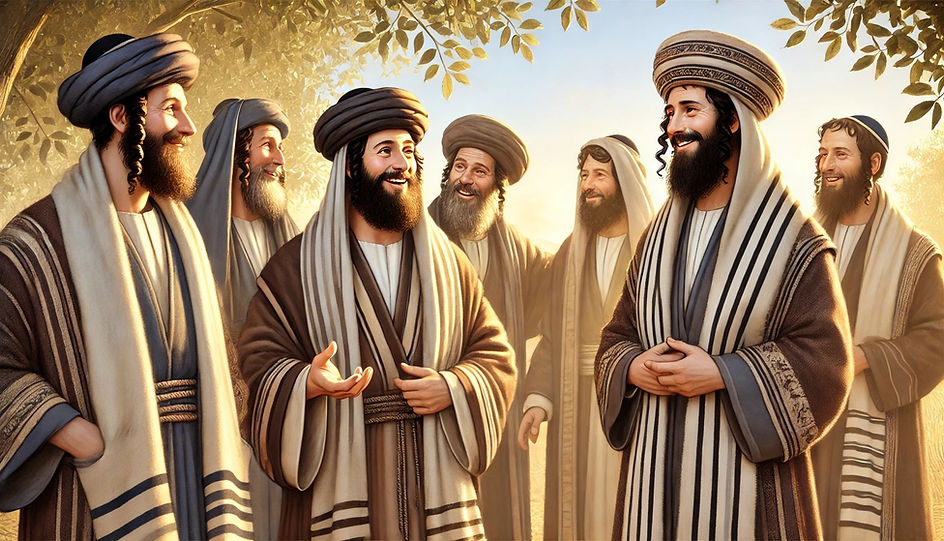
Chapter 8 The Blueprint of "The Way": Pharisaic Identity and Authority
This chapter moves from teaching method to identity. The question is not whether Pharisees existed somewhere near Yeshua’s story. The question is whether Yeshua, The Way, and Sha’ul operated inside a Jewish world shaped by Torah, synagogue, resurrection, scriptural reasoning, and halakhic authority.
Acts 15 gives a clear answer. Some believers in Yeshua came from the party of the P’rushim. They stood inside the early believing community and said Gentile believers should be circumcised and directed to observe the Torah of Moshe. This means Pharisees were not only outside critics of the Yeshua movement. Some were inside the movement itself.
The debate in Acts 15 was not Torah against no Torah. It was how Gentiles should begin walking with Israel’s God under the authority of Yeshua. Ya’akov did not erase Torah. He gave Gentile believers beginning requirements, then explained that Moshe had been proclaimed in every city, with his words read in the synagogues every Shabbat. Acts 15:21 explains why the Gentiles did not need to be overloaded immediately. They would continue hearing Torah in the synagogue and grow from there.
That detail matters. The synagogue remained the learning center. The Way was not being separated from Jewish life. Gentiles were being brought into the worship of Israel’s God with patience, wisdom, and order.
Matthew 5 shows the same kind of authority in Yeshua’s own teaching. He uses a familiar Jewish pattern of scriptural and legal reasoning. “It is written”, “You have heard that it was said”, and “But I say to you”.
This is why Yeshua’s authority should not be read as anti-Torah or anti-Jewish. He speaks as a Jewish teacher with the authority to interpret and apply Torah. He presses the commandment into the heart, not away from obedience.
Sha’ul carries this same world forward. In Acts 23:6, he does not say, “I used to be a Pharisee.” He says, “I am a Pharisee.” In Acts 26:5, he describes Pharisaic life as the strictest party of Jewish faith. In Acts 24:14, he says he serves the God of his fathers according to The Way, believing everything written in the Torah and the Prophets.
Therefore, The Way was not a Gentile religion detached from Israel. Yeshua taught with Torah authority. Believing Pharisees stood inside the early community. Ya’akov guided Gentile growth through synagogue learning. Sha’ul remained a Pharisee witness to resurrection and Israel’s hope. The first followers of Yeshua were walking The Way on Jewish ground, under Yeshua’s authority, with Torah still beneath their feet.
I have just started on the "Who Were the Pharisees" book. I am 76 years old, which isn't very impressive on a resume. Donations of any amount would be appreciated! An introduction to a pro bono attorney to help obtain 501(c)(3) status would be greatly appreciated.