
Who Were The Pharisees?
Chapter 6
Whom Did Yeshua Say That To? The Pharisees or His Own Followers?
This chapter challenges the double standard in Christian teachings that allows the failures of some Pharisees to define an entire Jewish movement, while Yeshua’s equally harsh rebukes of his own Jewish followers are treated as lessons in human weakness and spiritual growth.
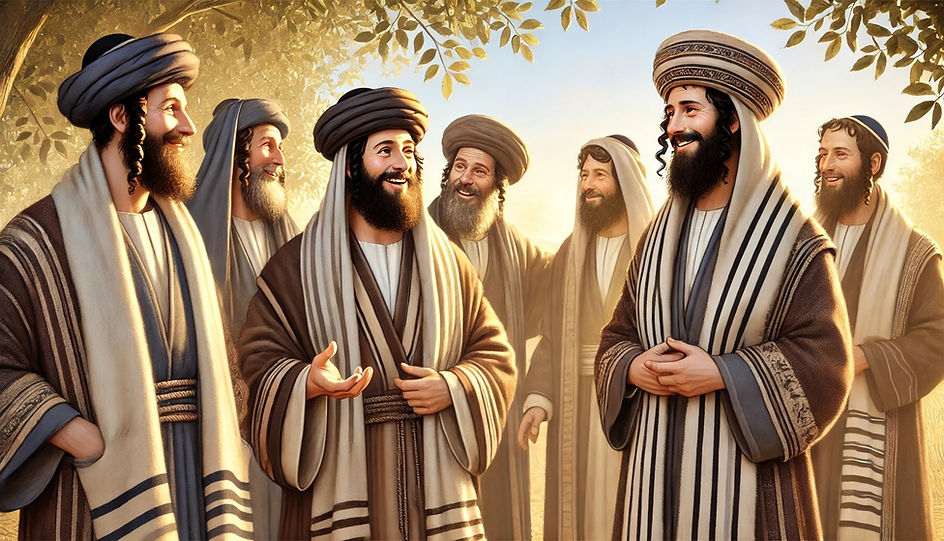
These encounters took place within a Jewish world. Yeshua was Jewish. His first followers were Jewish. The Pharisees were Jewish, and Acts 15:5 even describes Pharisees who became believers. His followers later became known as The Way, a name Paul used in Acts 24:14. They shared a people, scriptures, and a concern for faithfulness to God. Among people so deeply connected, disagreements could be passionate, even piercing. This was not a clash between a Christian outsider and Judaism. It was often an intense conversation within the Jewish family.
People often associate Yeshua’s harsh words with the Pharisees. But read his rebukes before learning whom he addressed. Would you guess correctly?
“Get behind me, Satan!”
HIS OWN FOLLOWERS - Matthew 16:23 - Peter objected to Yeshua’s coming suffering. One of his closest disciples received one of His fiercest rebukes.
“You blind fools!”
SOME PHARISEES AND TORAH TEACHERS - Matthew 23:17 - Yeshua challenged their reasoning about oaths and the Temple’s gold.
“Have your hearts been made like stone?”
HIS OWN FOLLOWERS - Mark 8:17 - The followers worried about bread despite witnessing miraculous feedings. Yeshua questioned their hearts.
“You are like whitewashed tombs”
SOME PHARISEES AND TORAH TEACHERS - Matthew 23:27 - He condemned the outward respectability of some Pharisees and Torah teachers when it concealed hypocrisy.
“Perverted people, without any trust!”
A GATHERING INCLUDING HIS FOLLOWERS - Matthew 17:17 - After his followers failed to heal a boy, He asked, “How long must I put up with you?” He rebuked the gathering, including some of his followers.
“You snakes! Sons of snakes!”
SOME PHARISEES AND TORAH TEACHERS - Matthew 23:33 - He warned some religious leaders of judgment for rejecting God’s messengers.
“Foolish people!”
HIS OWN FOLLOWERS - Luke 24:25 - After his resurrection, Yeshua rebuked two followers on the Emmaus road for being slow to trust the prophets.
“Yet one of you is an adversary.”
HIS OWN FOLLOWERS - John 6:70 - Yeshua spoke of Judas, one of the Twelve he had chosen.
Why the Double Standard?
No one should soften or selectively remember these words. Yet some Christian teachings turn rebukes of a few Pharisees into labels for all Pharisees. Equally severe words to Yeshua’s followers become lessons in human weakness and growth.
Why do the failures of some come to define an entire Jewish movement, while his followers' failures remain individual shortcomings?
The followers’ failures become lessons. The Pharisees’ failures become their identity. That double standard deserves to be challenged.
I have just started on the "Who Were the Pharisees" book.
I am 76 years old, which isn't very impressive on a resume. I am also an artist. Any donation or an introduction to a pro-bono attorney to get a 501C status would be appreciated!